

By Christina Swanson, BA, CHN
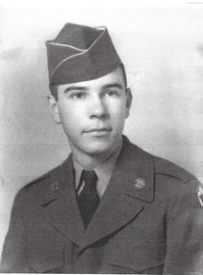
“Right place, right time, right uniform.” These words give a glimpse at the interesting life of a man who, although never having left the states serving in the Army, knows that this early time set the trajectory of good choices and positive benefits for his life’s journey.
William Masterson grew up all over Florida in the 1940s and 50s. This was because his dad was a Customs’ or “dry” agent enforcing the 18th Amendment running down whiskey smugglers. When prohibition ended, dad became an investigator with the alcohol tax unit, under the Bureau of Internal Revenue, to ensure the liquor industry paid federal taxes. This is while William was attending Robert E. Lee High School on Jacksonville’s westside, when the family first lived on Lydia Street, then Catherine Terrace in Murray Hill.
His dad suddenly died the summer after he graduated high school in 1952. On his death bed, he told William to get at least one year of college in before anything else so he went to the University of Florida for one year, spending his life savings majoring in business administration.
“I next volunteered for the draft because it was only for two years and I needed a way to pay for the remainder of college, knowing I could do this with the GI Bill,” said Masterson. Joining the Army in August, 1953, he attended bootcamp at Fort Jackson, SC, and then to unit supply specialist school to learn how to handle supplies for the 594th Quartermaster Company.
His first assignment was at Fort Lee, VA, (now officially known as Fort Gregg-Adams), which was the primary home of the U.S. Army Quartermaster Corps and its training school since 1941. During and after the Korean War, in the 1950s and 1960s, it processed and trained thousands of logistical specialists. Masterson became a supply handler at Fort Lee helping distribute food by emptying box cars and putting items in storage, or if going overseas, preparing for shipment. Because he could type, he also began working in plans and training, typing the teachers’ schedules for the subject matter they were teaching the troops on current training and updating instruction manuals.
“Most of the people I worked with were fellow draftees and the sergeants were helpful as mentors,” said Masterson. “I actually didn’t mind KP duty because the cooks were nice to me. As the government was closing bases and reducing troops, bringing personnel back from the Korean War, I got a chance to meet a lot of interesting people who had been through difficult times in combat, as Fort Lee was the place where many spent their time to complete their enlistment schedule.”
“Being in the military gave me a purpose, helped me appreciate my upbringing and improved my life with all the benefits from the GI Bill,” said Masterson.
Next, he returned to college and graduated from Florida State University with a degree in business. Then he started working for McGriffin and Company, a prominent local maritime firm that acted as a custom house broker, steamship agent, warehouse company and stevedore contractor. In the 1960s, stevedore contractors or what longshoremen were called, would manage the loading and unloading of cargo from merchant ships docked at the Port of Jacksonville. They also helped coordinate the turnaround of freighters engaged in Florida’s international and coastal trade.
“The ships came in on Talleyrand Avenue filled with autos from England, Japan, or Germany, whiskey from Scotland, sugar from Cuba, even seed potatoes from Canada, that would go to Hastings, FL, to be planted,” said Masterson.
He worked there for seven years as an inward freight manager, handling the bill of lading and running the warehouse and distribution of all the cars that came in through McGiffin and Company. “I controlled the entire physical and paper pipeline for imported vehicles coming into the port, orchestrated operations from ship to inland carrier, including the temporary staging of cars in the port’s warehouses, organized by make, model and final destination.”
“A lot of times, cars would come in damaged by breaking loose during shipment on the Atlantic, and they were literally smashed up and only recognizable through their type of wheels,” said Masterson. “One of my best mentors was there, a wonderful lady who was familiar with every department, taught me the ropes, and was the equivalent of today’s CEO.”
One of his customers, Land-Rover, really the first sport utility vehicle, although this category didn’t exist in the 1960s, and known as the aluminum jeep, stole him away from McGiffin. His job was to travel throughout Florida, Georgia and Alabama to convince established car companies to add the Land-Rover to their franchise. He did a lot of traveling, even to Soho, England, the headquarters for this vehicle that utilized the box-frame chassis of a surplus WWII Willys Jeep. “There is still a dealer here at Fields Jaguar-Rover on Atlantic Boulevard,” said Masterson.
After two years, Masterson started working for Brumos Porsche Car Dealership, owned by the race car driver Peter Greg. He ended up staying there for 30 years. The sales manager, a retired Marine master sergeant, taught him how to sell cars, sharing all his tips, secrets, and how to push people’s buttons to get them to buy. The dealership eventually branched out to not only sell Porsches but also Audis and Mercedes Benzs.
“First Audi I sold, this guy came up driving an Oldsmobile Toronado, and since they are both front wheel drive cars, I could reassure him it would be a familiar ride,” said Masterson. “He had a little Scottie dog with him and as I was talking to him, my foot was getting warm and I realized the dog was peeing on me. The guy was so embarrassed that he bought the car right then.”
Over the years, he advanced to both used car and new car managers, but because he enjoyed selling, he went back to doing that. He’s sold to a variety of customers from Alaskan bush pilots, to folks from Hawaii, Washington State and New York, and have personally delivered many of the cars. “Lots of folks here on vacation came in and bought a car.”
He's also had to tell folks to pull over and get out during demonstration rides when they got behind the wheel and started acting like a race car driver, driving recklessly.
The most important advise he’s given to other salesmen is to be nice and don’t prejudge people. “When I was selling Rovers, I was giving a class on selling them when a guy came up driving a stake body truck covered in mud, wearing bib overalls, a straw hat and boots,” said Masterson. “We would soon learn that he was known as the Everglade’s Tomato King. No one would wait on him and so I told one of the salesmen to go talk to him because he is going to surprise you. He bought a Ferrari for his daughter’s 21st birthday on the spot and wanted it delivered the same day. These are the things you remember.”
“Being in the military and selling cars all boils down to treating others with kindness. I like to think that being a part of the same church since 1968, and being with the same folks in Sunday School class since 1971, has helped me build great bonds and see what’s important in life,” said Masterson. “I was lucky that my wife, Patricia, was also a mentor in bringing me to the Lord and I know that everything I have is His and not mine.”
“Just like the military is a great equalizer because we all look alike in a uniform, my pastors and Bible teachers have helped me grow in my faith, appreciate my many blessings, and live my life for the Lord.”